Copyright 2024 © Oceania Enviro Pty. Ltd. All rights reserved.


OCEANIA ENVIRO PTY. LTD.
ACN: 635 220 487 ABN: 18 635 220 487
Global HQ - Gold Coast Hwy, Surfers Paradise 4217, Gold Coast, Queensland Australia.
Greece HQ - Leoforos Vouliagmeni Glyfada 16674, Athens, Attika Greece
CONTACT
Tas Mavroulis (Principal) - Mob: 0474 868 876
Email: oceaniaenviro@bigpond.com







Resort Motel Construction Planning and Execution
Planning and executing a resort motel construction project involves a structured, multi-phase process that
blends strategic vision, regulatory compliance, financial management, and operational readiness. Resort
motels, often located in scenic or leisure-oriented areas, emphasize guest experiences like relaxation,
amenities (e.g., pools, spas, outdoor recreation), and integration with the natural environment.
This proposal and guide outlines the key phases, drawing from established industry practices for hotels
and resorts. The timeline can span 18-36 months depending on scale, location, and complexities, with
costs varying widely (e.g., $200,000-$500,000 per room for mid-tier projects). Success hinges on early
planning, risk mitigation, and stakeholder collaboration.
Overview of Key Phases
Here's a high-level timeline and phase breakdown for a typical resort motel project:
This framework adapts to various resort motel types, such as eco-friendly retreats, family-oriented spots,
or luxury beachfront properties.
1. Vision and Concept Development
Start with a clear creative vision to differentiate your resort motel. Identify the type (e.g., wellness spa,
adventure-themed, or budget-friendly eco-motel) and target audience (e.g., families, couples, or business
travelers). Conduct initial market research to analyze demand, seasonality, and competitors.
Key Activities: Assemble a development team (architects, consultants, project managers) based
on experience. Develop brand identity, objectives, and a preliminary business plan. For Australian
projects (given your location in Sydney), consider local tourism trends like sustainable coastal
developments or integration with natural sites.
Challenges and Tips: Ensure uniqueness while aligning with guest expectations; avoid
overambitious concepts by validating through surveys. Engage stakeholders early to fill expertise
gaps.
This phase sets the foundation, preventing costly pivots later.
2. Feasibility Study and Site Evaluation
Assess if the concept is viable through in-depth analysis. This includes a market feasibility study to
evaluate economic conditions, demographics, tourism trends, and projected occupancy/revenue.
Key Activities: Evaluate site factors like accessibility, topography, climate, water availability, and
environmental sensitivities (e.g., flood risks or protected habitats). Conduct soil tests, geotechnical
studies, and regulatory due diligence for zoning, land-use, and infrastructure. Develop financial
models, including cost estimates, cash flow projections, and ROI analysis. For resorts in Australia,
factor in state-specific regulations like NSW planning laws or environmental impact assessments
under the EP&A Act.
Challenges and Tips: Physical or market limitations could halt progress; mitigate by hiring
independent consultants for unbiased reports. Don't skimp here—it's crucial for attracting
investors.
A thorough study confirms profitability and guides financing options, such as loans or partnerships.
3. Design and Master Planning
Translate the vision into blueprints, focusing on layout, architecture, and guest experience. Zone the site
into areas like accommodations, dining, recreation, and back-of-house operations.
Key Activities: Create a master plan with circulation paths, views, and expansion phasing. Select
design styles (e.g., tropical vernacular or modern minimalist) and materials (e.g., sustainable
timber). Integrate engineering for utilities, sustainability (e.g., solar power, rainwater harvesting),
and theming (e.g., sensory elements like lighting and aromas). Conduct environmental and
cultural impact assessments to minimize habitat disruption.
Challenges and Tips: Balancing functionality with immersion; use 3D modeling to visualize and
iterate. Prioritize guest touchpoints for seamless flow.
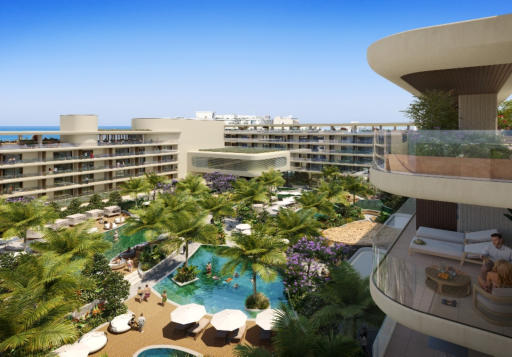
For inspiration, here's an example of a completed resort motel layout emphasizing pools and scenic
integration:
4. Procurement and Pre-Construction
Secure resources and approvals before breaking ground. This bridges planning to execution.
Key Activities: Finalize financing (e.g., equity, loans, grants) with contingency buffers (10-15%).
Obtain permits (construction, environmental, health/safety) and select contractors experienced in
hospitality builds. Develop detailed budgets, schedules, and contracts. Perform sustainability
assessments for eco-friendly procurement.
Challenges and Tips: Delays from approvals or funding; streamline with experienced project
managers and parallel processing (e.g., vendor selection during design).
Preparation here reduces on-site risks.
5. Construction
The hands-on building phase, where the project takes physical form. Monitor progress closely to stay on
timeline and budget.
Key Activities: Site preparation (clearing, foundations), superstructure erection, MEP
(mechanical, electrical, plumbing) installation, interior fit-outs, and landscaping. Use project
management tools for tracking milestones, safety compliance, and quality inspections. Consider
modular construction for efficiency in remote resort locations.
Challenges and Tips: Supply chain issues or weather; build contingencies and conduct regular
walkthroughs. Hire local labor for community buy-in.
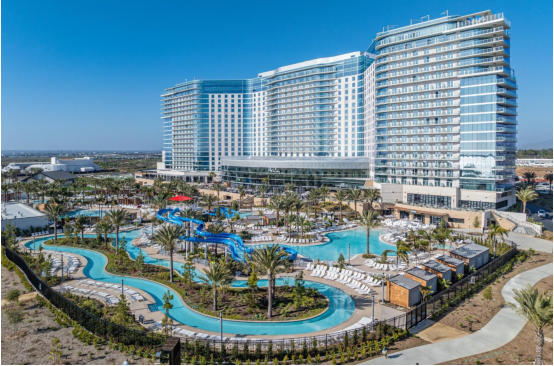
Visualize a large-scale resort under construction turning into a finished property, like this expansive
waterfront example:
This phase typically accounts for the bulk of time and cost.
6. Opening and Operations Setup
Finalize for launch, ensuring a smooth transition to revenue generation.
Key Activities: Complete punch lists for minor fixes, install operational systems (e.g., PMS,
booking engines), recruit and train staff (e.g., GM, housekeeping, F&B). Develop marketing
strategies (website, social media, partnerships) starting 12 months prior. Conduct soft launches
for testing, secure certifications, and gather initial feedback.
Challenges and Tips: Building team culture and hype; use digital tools for pre-bookings and
focus on unique experiences to drive loyalty.
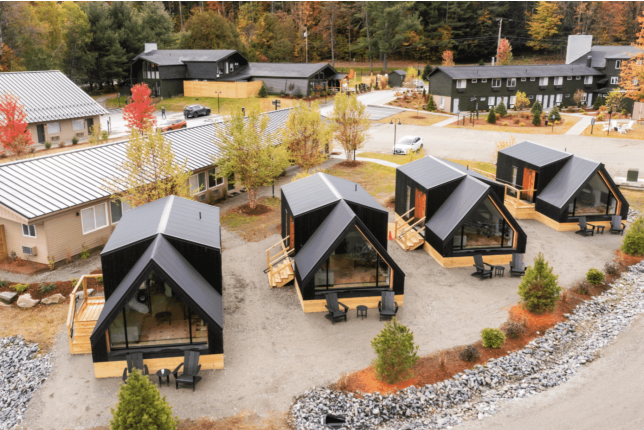
For a smaller-scale resort motel vibe, consider modular cabin-style setups like this forested example:
Post-opening, monitor performance and iterate based on guest input.
In summary, successful execution requires proactive risk management, sustainability focus, and
adaptability.
For projects in Australia, consult resources like the NSW Department of Planning or local councils for
tailored compliance. If scaling smaller, modular approaches can accelerate timelines while maintaining
quality.







Phase
Duration
Estimate
Key Focus Areas
Potential Challenges
Vision and Concept
Development
1-3 months
Defining resort type, market
research, team assembly
Aligning vision with market
viability
Feasibility Study and
Site Evaluation
2-4 months
Market analysis, site assessment,
financial projections
Regulatory hurdles,
environmental restrictions
Design and Master
Planning
3-6 months
Architectural design, layout zoning,
sustainability integration
Balancing aesthetics with
functionality
Procurement and Pre-
Construction
2-4 months
Financing, permits, contractor
selection
Securing funding, approval
delays
Construction
12-24
months
Site preparation, building, quality
control
Weather disruptions, budget
overruns
Opening and
Operations Setup
2-3 months
Staffing, marketing, final
inspections
Operational testing, guest
feedback integration